

Laying the Groundwork
Once your perimeters are anchored, preparing the soil surface is the single most critical step in establishing a healthy, low-maintenance landscape.
Rather than stripping valuable topsoil or disrupting dormant weed seeds through aggressive tilling, our approach builds soil biology from the ground up.
By layering biodegradable barriers, nutrient-rich organic coverings, and stabilized aggregate systems, we suppress persistent turf grass, lock in essential moisture, and establish a firm, weed-resistant foundation engineered for longevity in Ontario’s climate.
Below, we break down the core materials we use across our planting beds and pathways. We’ve outlined their functional advantages, key considerations, and relative cost levels to help you balance your initial material investment with long-term performance and find the right fit for your property.
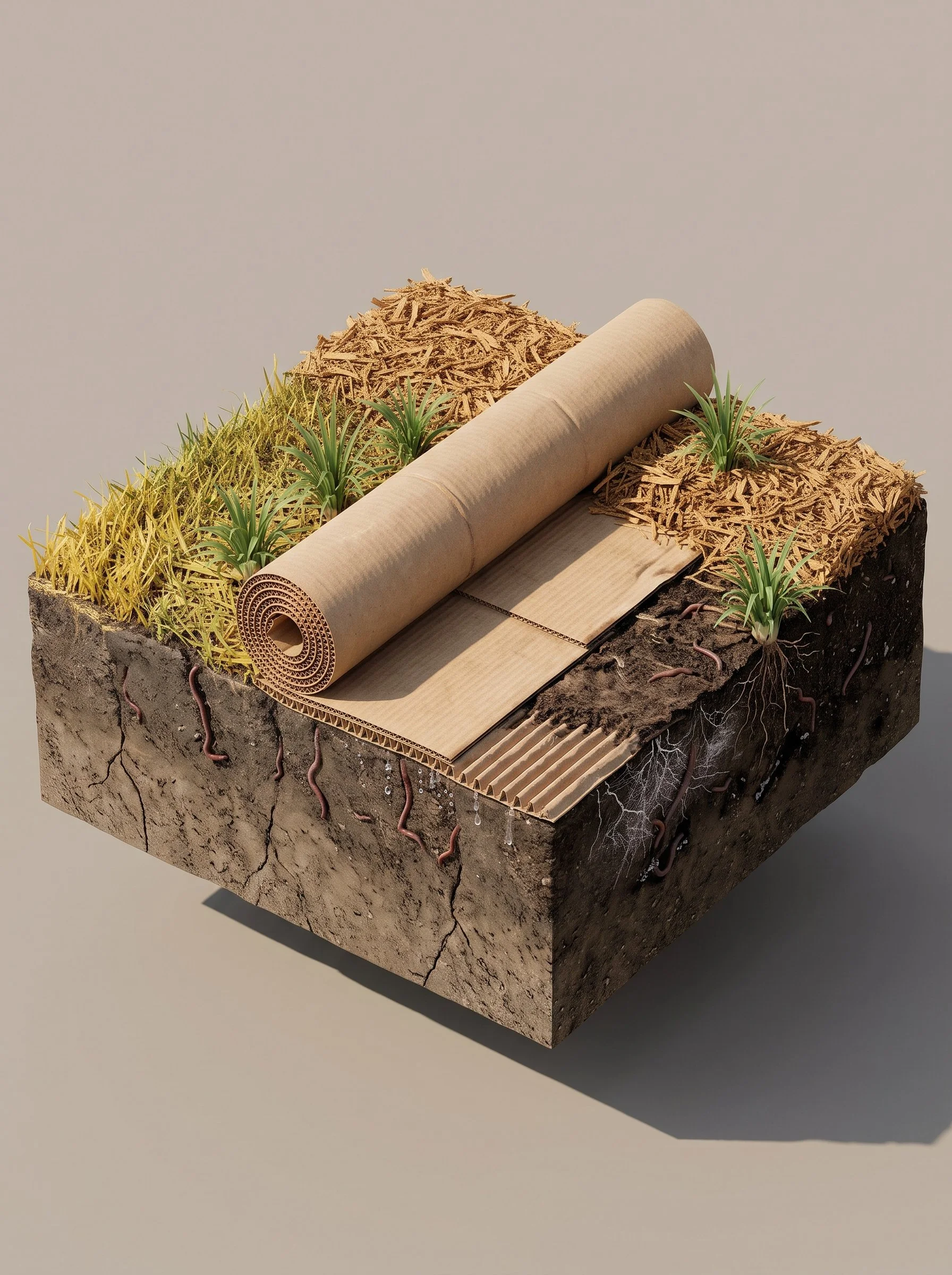
Rolled, untreated corrugated cardboard serves as the biodegradable backbone of our turf conversion and sheet-mulching process. As an incredibly cost-effective foundation, it is laid directly over existing turf with generous overlapping seams to starve competitive grasses of sunlight—completely eliminating the need for synthetic herbicides. As it slowly breaks down over several seasons, the unbleached cellulose feeds native earthworms and beneficial soil fungi, gently softening compacted Ontario clay. This creates a temporary, impenetrable shield that stops dormant weed seeds from germinating, while still allowing vital water and oxygen to penetrate freely into your new planting beds.
Untreated Corrugated Cardboard
Shredded Natural Cedar Mulch
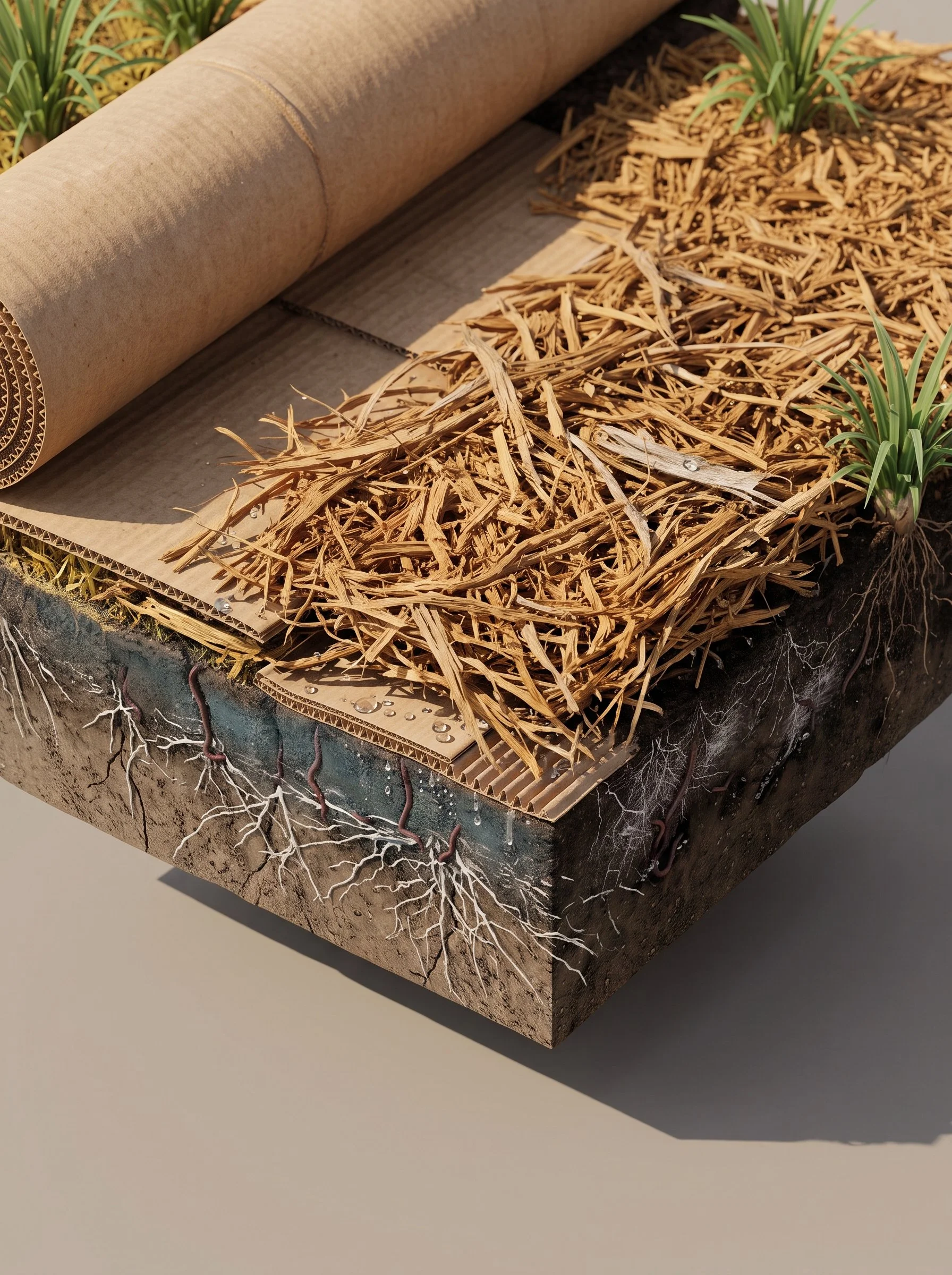
Sourced regionally and applied in a generous 3-inch layer over planting beds, shredded natural cedar mulch provides vital thermal regulation, moisture retention, and organic structure. Its fibrous, interlocking texture knits together tightly to resist washouts during heavy Ontario thunderstorms and high winds, unlike lightweight bark nuggets that float or scatter easily. As a natural byproduct, cedar contains natural resins and thujone oils that deter common pests while slowly releasing organic matter as it decomposes over time. By buffering delicate root zones against rapid winter freeze-thaw cycles and scorching midsummer heat, it preserves soil moisture and reduces your need to water.
Coir & Jute Netting
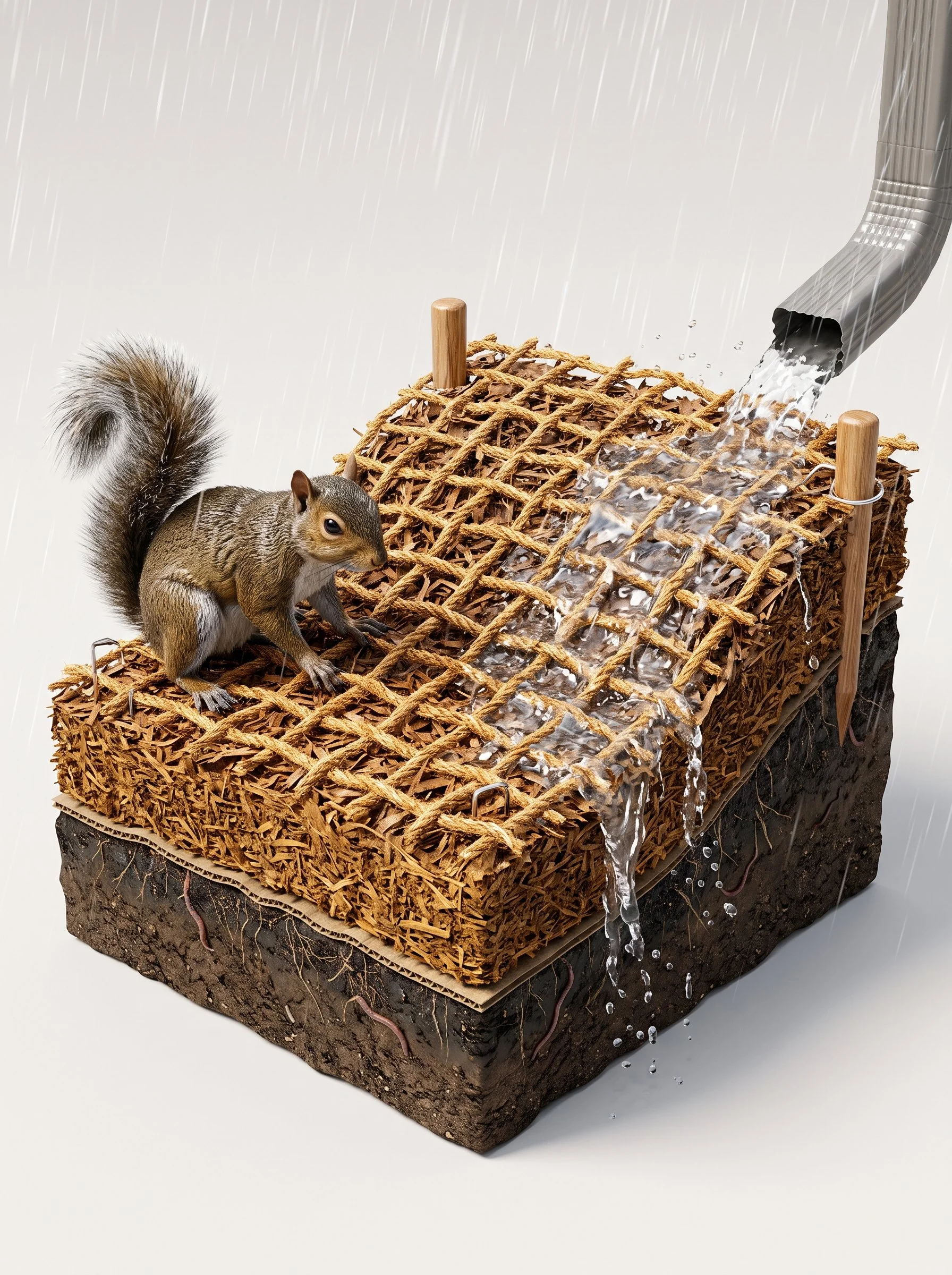
Woven from 100% natural, spun coconut husk fibers, coir netting acts as an open-mesh protective blanket installed across freshly prepared beds during their vulnerable initial establishment phase. For areas featuring delicate newly planted perennials or tighter spaces where finer grid spacing is ideal, 100% natural jute mesh netting or burlap fabric serves as a flexible, gentle alternative. These natural nets shield freshly spread organic mulch and loose soil from curious backyard neighbors like squirrels, skunks and raccoons—especially during busy autumn foraging when squirrels in particular routinely dig around young, unanchored root balls. Staked firmly over your mulch layer, the mesh gently protects sensitive planting pockets while providing vital, heavy-duty erosion control. It anchors organic mulch securely in place during intense Ontario downpours, preventing washouts on slope transitions, near driveway runoff zones, or within the high-volume water flow of a rain garden. Depending on the material chosen—safely biodegrading within 6 to 18 months for lighter jute mesh, or 2 to 4 years for heavy-duty coir—the netting eventually breaks down into harmless organic matter, stepping aside just as your native perennials mature and knit together their own protective root canopy.
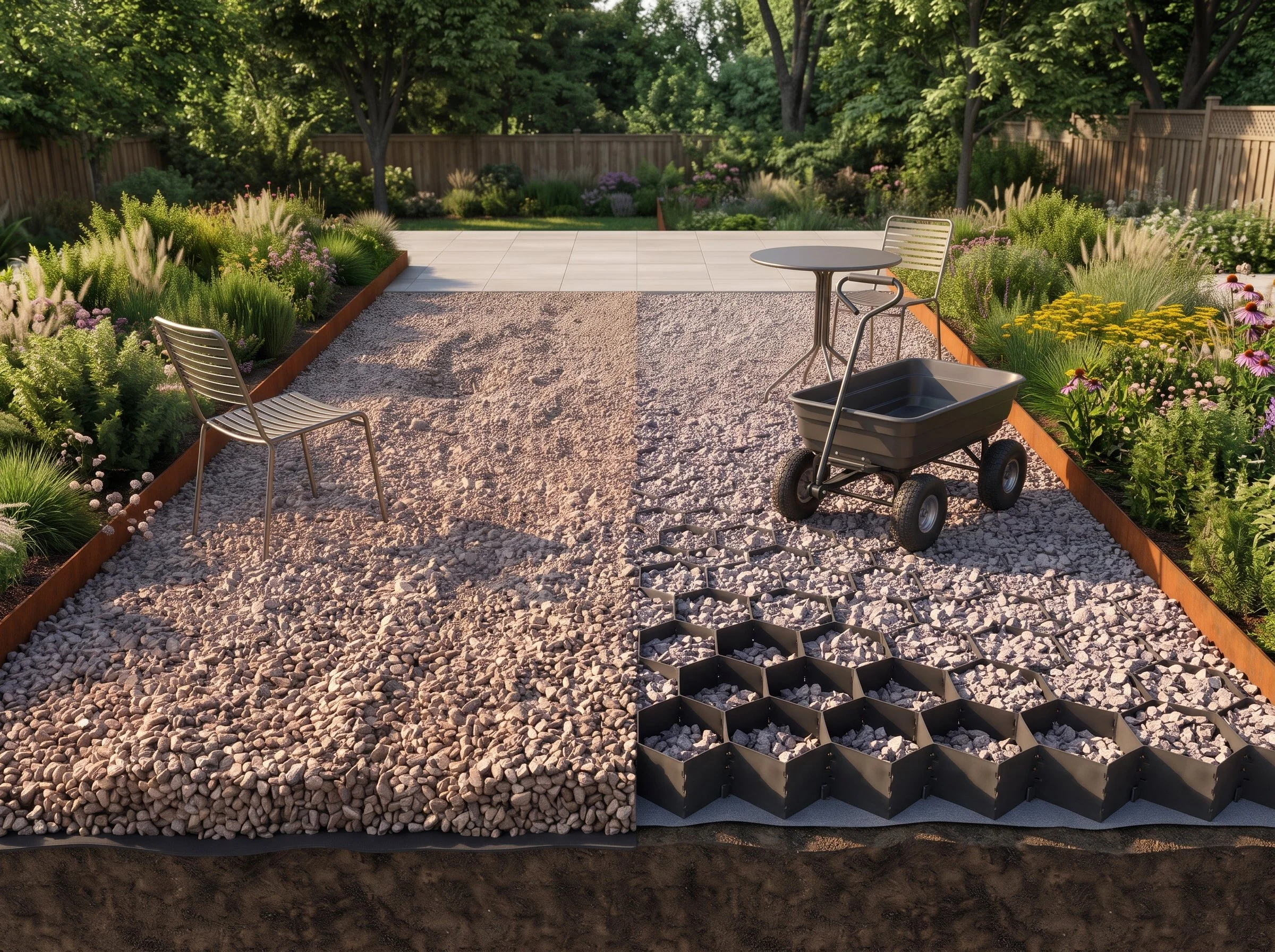
Permeable Gravel, Geotextiles & Stabilization Grids
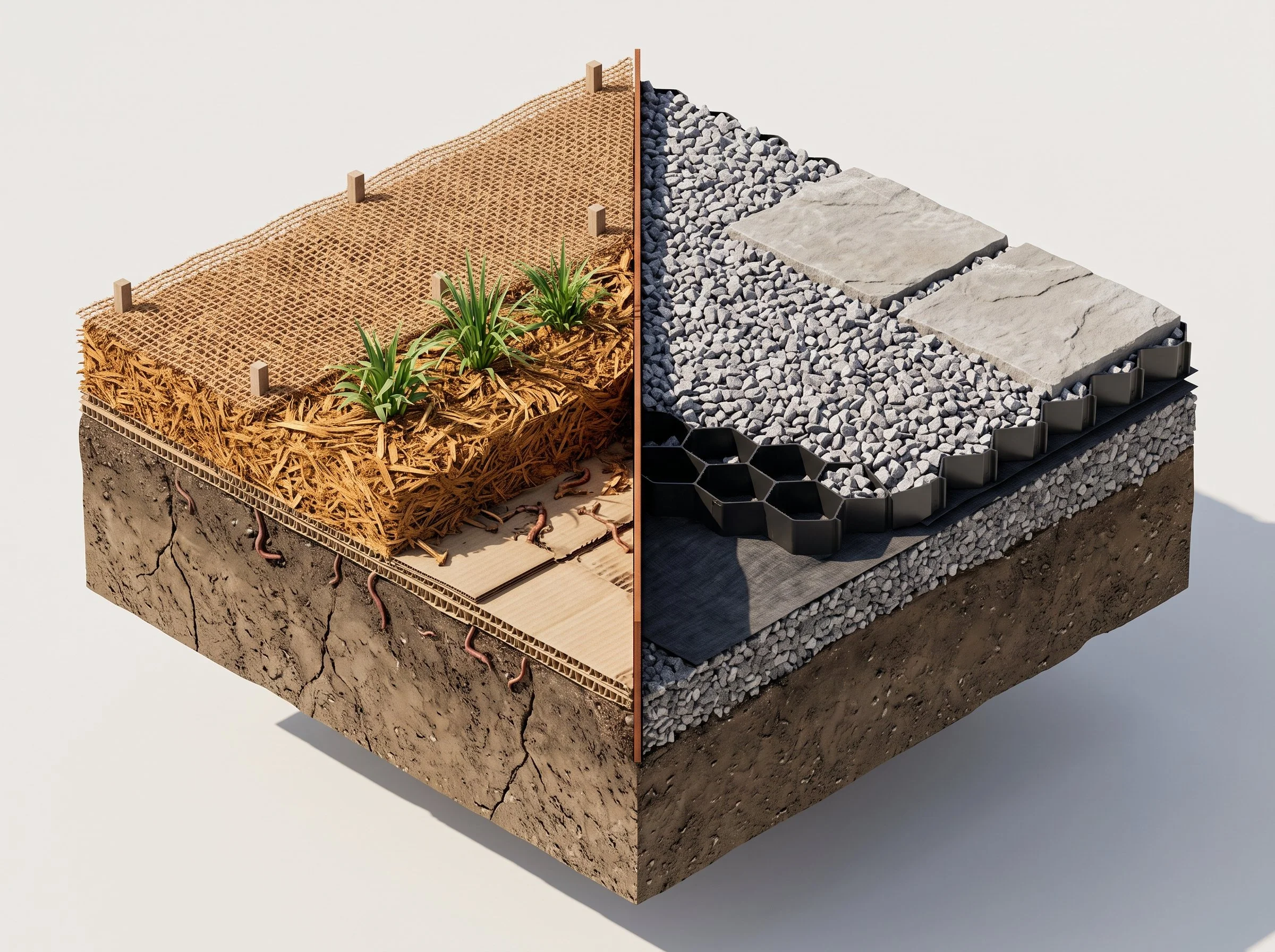
For functional walkways, secondary gathering zones, and seating areas, a permeable gravel system provides a practical, free-draining alternative to traditional hardscaping. For a standard loose gravel pathway, installation begins over a robust non-woven geotextile separation fabric. This crucial, cost-effective layer prevents the aggregate from sinking into the subgrade soil over time while allowing rainwater to infiltrate naturally.
To dramatically improve surface stability, we can upgrade your pathway with a rigid honeycomb grid system (such as CORE Path). While the modular grid panels represent an added upfront investment, they lock the stone into a shallower profile, effectively cutting the required gravel volume in half to offset some of the material costs. More importantly, this rigid framework prevents loose stones from migrating into garden beds, resists rutting from wheelbarrows, and creates a firm, supportive base that stops patio chairs and table legs from sinking or wobbling. (Note: These high-performance grid systems typically feature an integrated geotextile backing heat-welded directly to the underside, streamlining the installation).